Maritsa · Quality
What the lab found
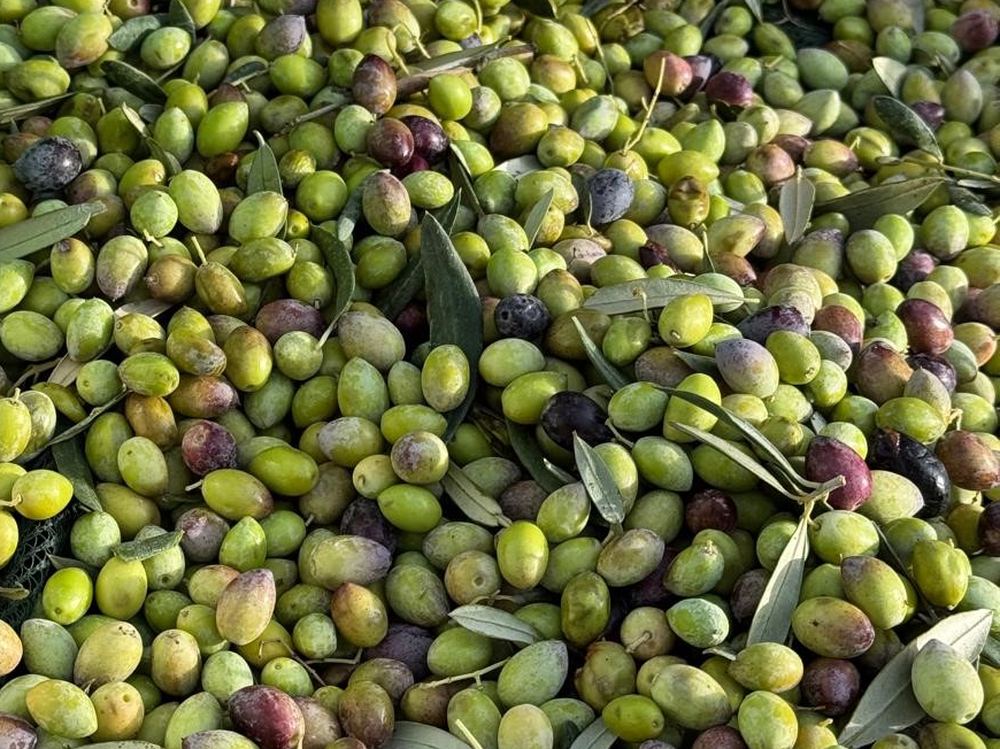
Koroneiki olives on harvest day at Kampia. Photograph: K. Maritsa Estates.
Maritsa is tested by an independent laboratory, TÜV Austria Labs in Nicosia. The latest report, on bottled oil sampled in September 2026, supports an authorised health claim. This is what it says, and what each number means.
The claim
Polyphenols, tested
The claim can only be used for olive oil that contains at least 5 mg of hydroxytyrosol and its derivatives in every 20 g. Hydroxytyrosol is one of the polyphenols that comes from the olive itself.
The September report measured hydroxytyrosol in Maritsa at 345.5 mg/kg. That is 6.9 mg in 20 g of oil, above the 5 mg the claim requires.
In plain words
What the claim means
Blood lipids are the fats carried in your blood, cholesterol among them. Oxidative stress is the damage those fats can suffer when they react with oxygen in the body. The polyphenols in olive oil help protect them from it.
The claim rests on a 2011 scientific opinion from the European Food Safety Authority, which reviewed human studies of olive oil polyphenols, and it was authorised in Regulation (EU) No 432/2012. It applies only to olive oil that meets the condition above, taken at about a tablespoon and a half a day as part of a varied, balanced diet.
Read the sources: EFSA scientific opinion, 2011 and Regulation (EU) No 432/2012.
Freshness
Every freshness test at a fraction of the limit
Extra virgin is not a word a producer gets to choose. It is the top grade of olive oil, set in law by a tasting panel and a list of chemical limits, and an oil that fails any one of them cannot be sold as extra virgin. These are the bottled oil's results against those limits.
| Test | Result | Extra virgin limit | What it tells you |
|---|---|---|---|
| Free acidity | 0.18% | 0.8% max | How far the fat in the fruit has started to break down. Bruised fruit, or fruit left waiting before the press, pushes it up. |
| Peroxide value | 4.16 | 20 max | Early oxidation in the oil at the time of testing (mEq O2/kg). |
| K232 | 0.635 | 2.50 max | Ultraviolet absorbance, a second measure of early oxidation. |
| K270 | 0.088 | 0.22 max | Later oxidation, and a check for refined oil. |
| ΔK | 0.003 | 0.01 max | A further check that the oil has not been refined or treated. |
Keeping it
Dark glass, cool cupboard
Light, air and heat are what wear an oil down, and they are what the freshness tests pick up. Maritsa comes in dark glass and tin for that reason. Keep it the same way at home: cap on, away from the hob and out of the sun, and buy the size you will get through.
More from Stories

Sources: TÜV Austria Labs test report 6080-CY01099688-26-02 (24 September 2026); Regulation (EU) No 432/2012, olive oil polyphenols; maritsaestate.com for harvest and batch. Extra virgin limits as set for olive oil grading in Regulation (EEC) No 2568/91 as it applies in Great Britain; the same limits apply in the EU under Regulation (EU) 2022/2104. 20 g is about a tablespoon and a half of oil.