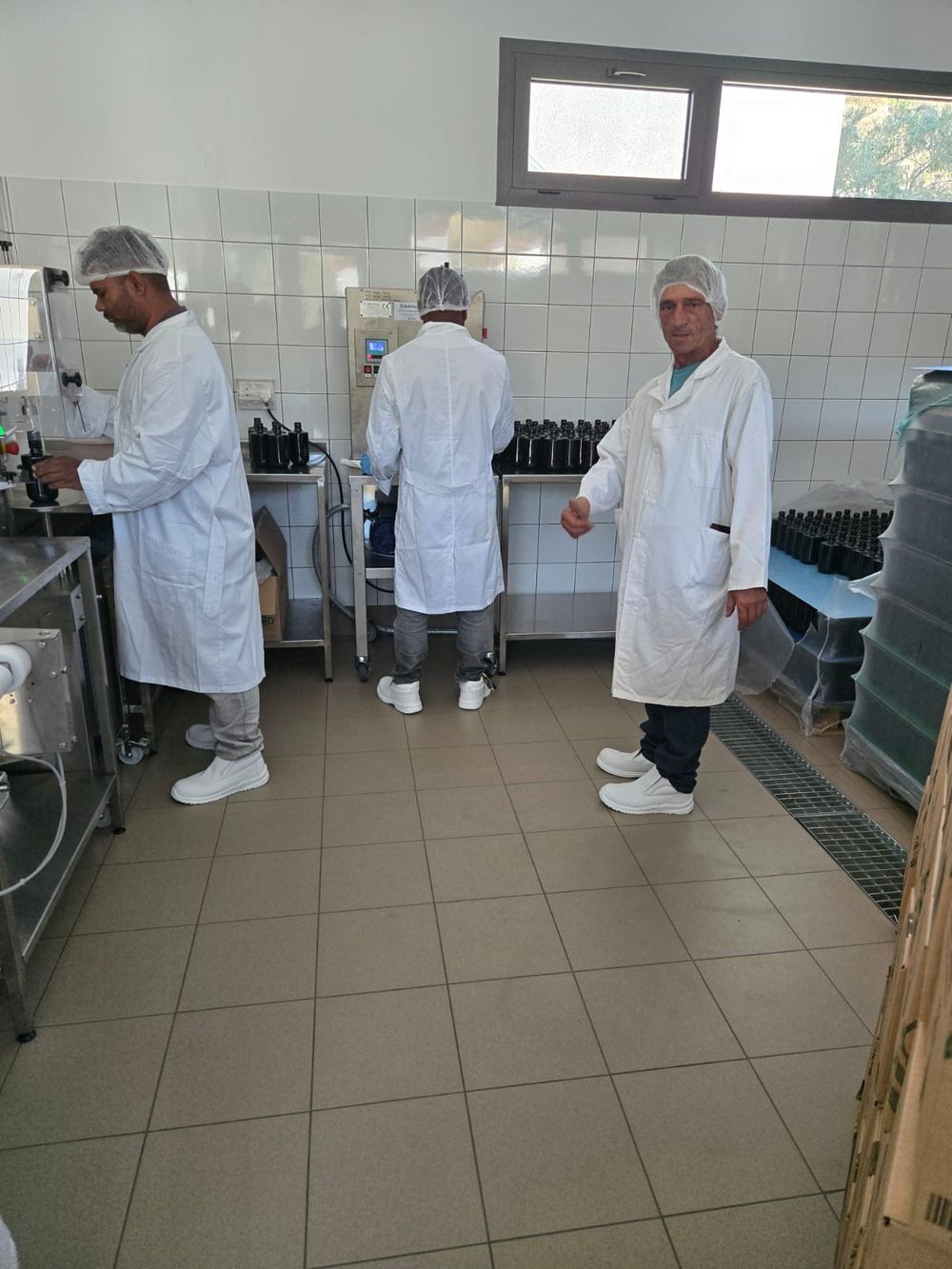
Chris Kleanthous and Sofroni at the bottling line. Photograph: the Kleanthous family.
Most of what makes an olive oil good happens long before it reaches the shelf. Here are the six things we look for, on the label and in the glass, and how Maritsa measures up against each one.
3 minute read
01
Single estate
Know where it was grown
Many oils are blends from several groves or countries. A single estate oil tells you where it was grown, and by whom. A mix with other vegetable oils cannot be sold as extra virgin.
MaritsaOne grove of 2,500 Koroneiki trees at Kampia, in the Machairas mountains of Cyprus.
02
Harvest date
Fresh is the point
Olive oil is at its best in the months after the harvest. A best before date is required by law; a harvest date is optional, so look for one.
MaritsaDecember 2025 harvest, batch ME0626.
03
Grove to press, cold
Hours, not days
Olives spoil once picked, and waiting for the press raises free acidity. Extra virgin must be 0.8% or less. “Cold extracted” or “first cold pressing” means the paste stayed below 27°C.
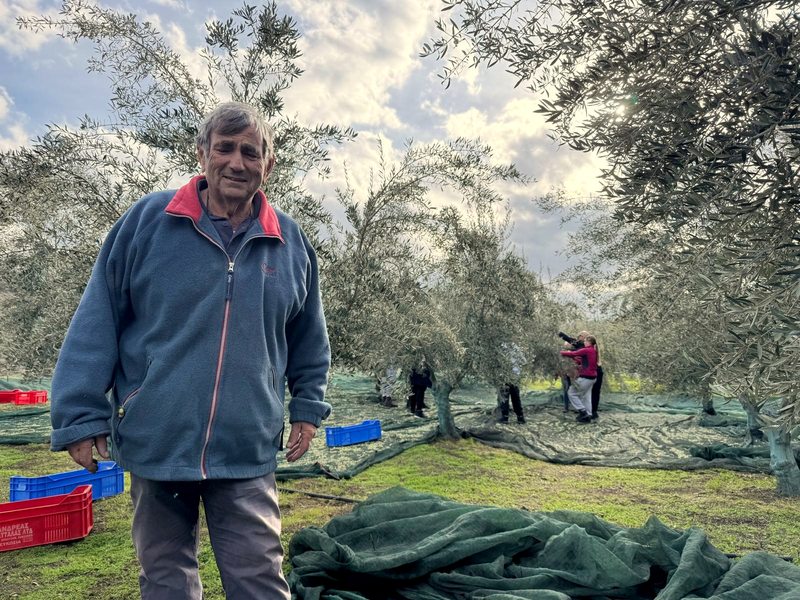
MaritsaPicked by hand and cold pressed within hours, the same day. Acidity 0.18% in September 2026.
04
Dark glass or tin
Keep the light out
Light, heat and air wear an oil down. Choose dark glass or tin, keep the cap on and keep the bottle away from the hob.
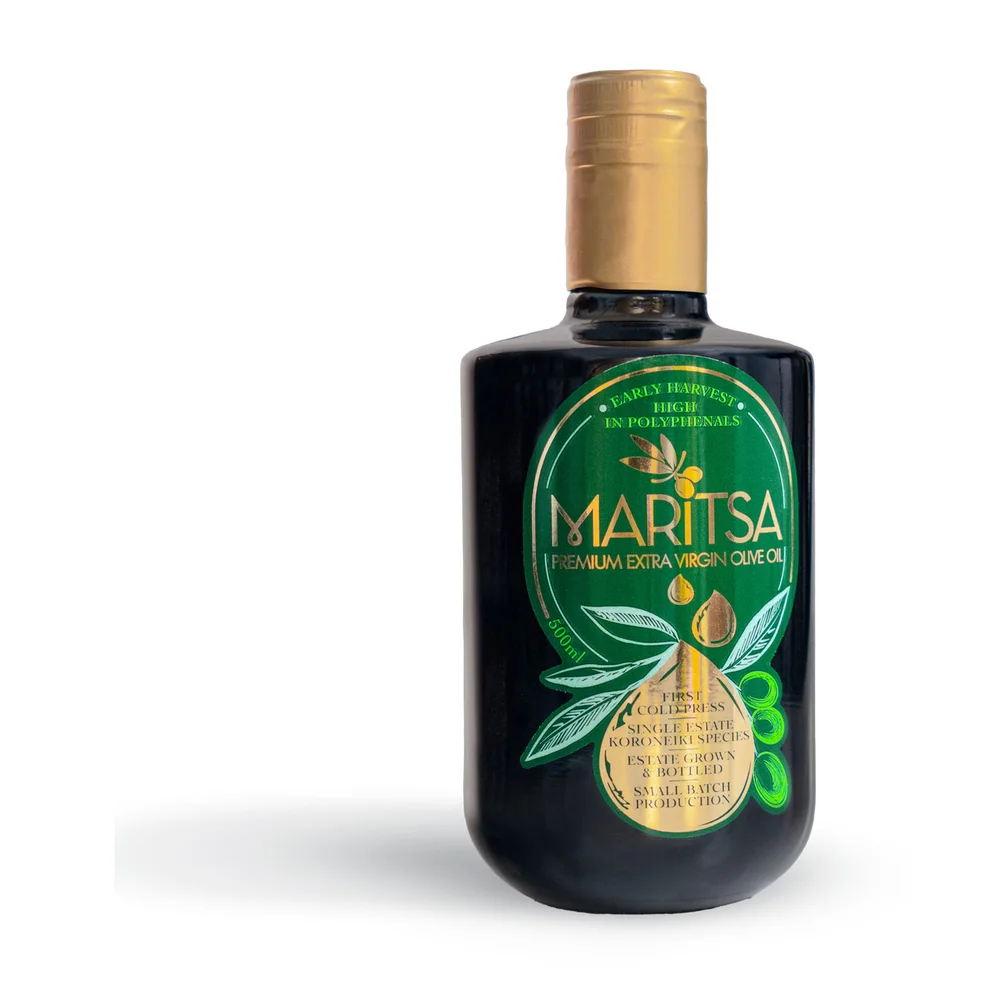
Maritsa100ml and 500ml dark glass, and a 5 litre tin.
05
Polyphenols
What the health claim is about
Polyphenols give a fresh oil its bitterness and pepper, and they fall as it ages. An oil can carry the health claim below only if it has at least 5 mg of hydroxytyrosol and its derivatives in every 20 g.
Taste a spoonful on its own. A fresh extra virgin oil tastes of fruit, with some bitterness and a peppery catch at the back of the throat. Flat, greasy or musty means old or damaged oil.
Maritsa Floral on the nose, fresh and fruity, with a peppery finish.
Maritsa figures: TÜV Austria Labs test report 6080-CY01099688-26-02, 24 September 2026.
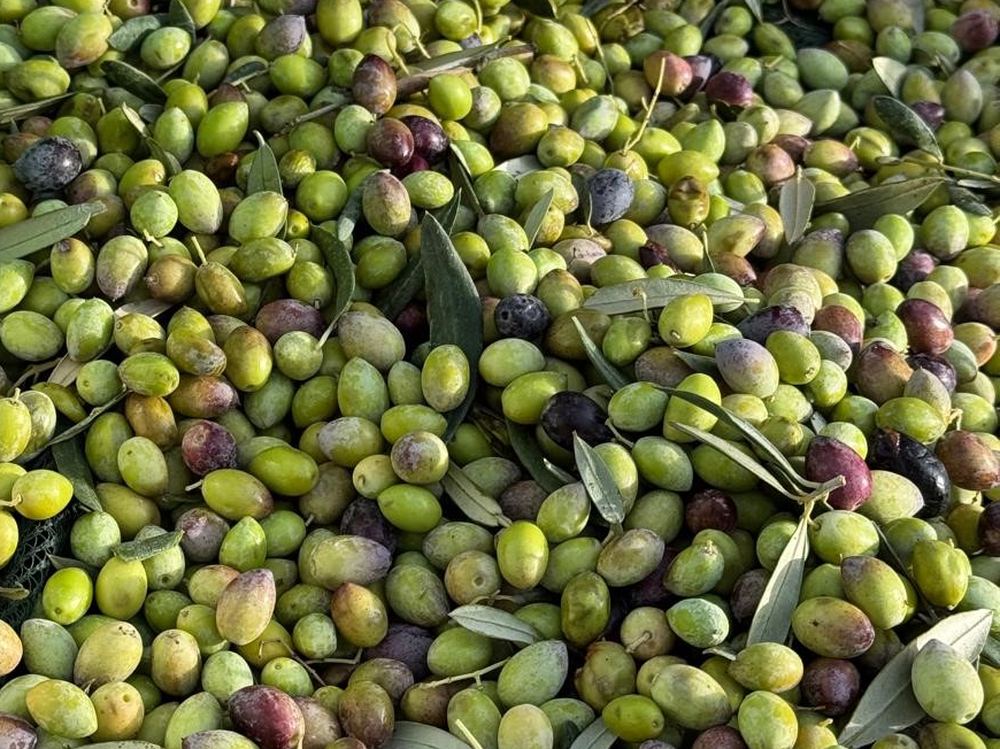
Harvest at Kampia, December. Photograph: the Kleanthous family.Maritsa, 500ml dark glass. Photograph: K. Maritsa Estates.
Sources: TÜV Austria Labs test report 6080-CY01099688-26-02 (24 September 2026); Regulation (EU) No 432/2012, olive oil polyphenols; extra virgin limits as set in Regulation (EEC) No 2568/91 as it applies in Great Britain; maritsaestate.com and the Kleanthous family for harvest, batch and packaging.